
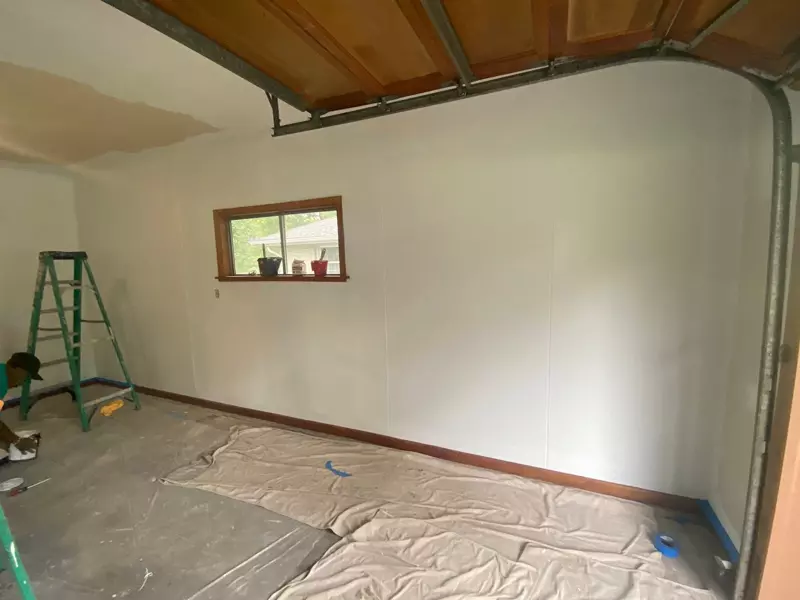
Most drywall repairs take longer to dry than to do. Filling a hole is quick. Waiting for the joint compound to dry between coats, then sanding, texturing and painting, is what stretches a repair over more than one visit or one day.
What decides the timeline
The size of the damage. Nail holes and small dents need a skim of compound. A hole from a doorknob or an old TV mount needs a patch behind it first. A large section of water damage may mean cutting out and replacing a piece of drywall.
Coats and drying. A good repair usually takes more than one thin coat of compound, with drying time between each. Thin coats dry faster and sand smoother than one thick one. Cold, damp rooms slow drying down, which matters in a Kansas City winter.
Texture. Smooth walls are the simplest. Orange peel and knockdown textures have to be matched over the patch so it disappears once painted.
Paint. Primer goes over the patch so it doesn't show through, then paint. If the wall color is old or faded, painting the whole wall corner to corner hides the repair best.
Common repairs and what each involves
Nail pops. Small round bumps where a drywall nail or screw has pushed out. The fix is to drive it back or add a screw beside it, then skim, sand and paint.
Cracks over doors and windows. These corners move a little as a house settles and the seasons change. Filling the crack alone often lets it come back. Taping over it first, then building up the compound, holds better.
Doorknob and furniture holes. Too big to fill on their own, so a patch goes behind or over the hole before the compound. A door stop afterwards keeps it from happening again.
Dented outside corners. The metal corner bead under the drywall can bend. Bad dents mean replacing a short piece of bead, then finishing it like any patch.
Water damage. Drywall that got soaked can sag, crumble or grow mold. Those sections get cut out and replaced, not covered.
Ceiling stains
A brown ring on the ceiling usually means water got in at some point. Find and fix the leak first. Then the stain needs a stain-blocking primer before paint, or it bleeds back through. Ceilings are harder to blend than walls because light hits them at a low angle, so painting the whole ceiling often looks better than spotting one area.
Popcorn ceilings
If the stain or crack is on a popcorn ceiling, it can be a good moment to remove the popcorn altogether. We remove popcorn ceilings and leave a surface that is ready for paint. In older homes, have the texture tested before anyone scrapes it, since some older textures contain asbestos.
How to get ready for the visit
Clear the area around each repair and take pictures off the wall. Point out every spot when the crew arrives, including the small ones you have stopped noticing. Have your paint color on hand if you know it. A can label or the name and code from the lid saves guessing.
Do it in one visit
If you have several patches, a cracked corner and a room that needs a fresh coat, put it all on one list. Our crew can work through the patches, then paint once everything is ready. Patching every spot first means the paint goes on once, not room by room as each repair dries.
Hometown Hammer's own W-2 crew does the work, covered by General Liability and Workers' Compensation insurance and our one-year workmanship warranty. Estimates are free.
Questions
Can you match the texture on my wall?
Yes. We patch the drywall, match the texture around it and paint the area to blend in.
Can you paint the whole room after the repair?
Yes. We can paint the patched wall, the whole room or several rooms.
Can you fix a water stain on the ceiling?
Yes, once the leak is fixed. We prime the stain so it doesn't bleed through, then paint the ceiling to match.
Do you remove popcorn ceilings?
Yes. Removing popcorn ceilings is on our list. We give you a free estimate after we see the room.